
Start With Why
When Beckham was young, transitions were hard. He was nonspeaking, and we were desperate for a way to bring more predictability and peace into our home. I couldn't find a visual calendar that worked for us, so I made one.
That calendar, taped to our fridge, changed everything. It gave Beckham a way to understand what was coming next. It gave me a way to stop repeating myself. And it sparked what would become Fern Family Co.
Over the years we've added more boards as our family grew and our needs changed. Each one was built to solve a problem I was facing as a parent, because I needed them too.
Here's a quick guide to help you find what fits best for your child, your routines, and your season of life.
What Do You Need Help With?
-
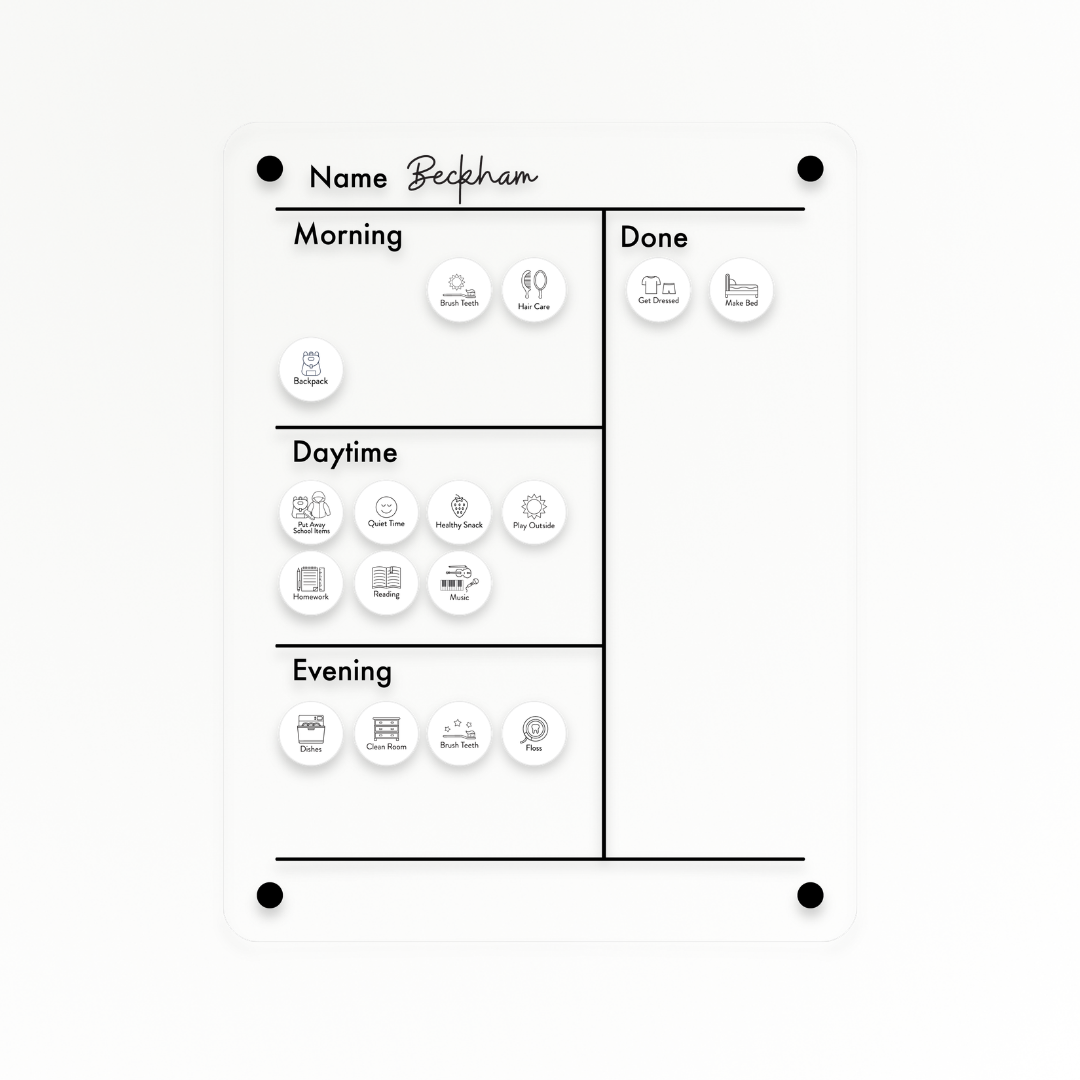
1. Structure
Use the Routine Daily Board.
Built for school mornings when everything felt chaotic and rushed. Best for kids who do well with clear, repeatable steps they can follow independently. Resets every morning, same order every day.
-

2. Choice and Balance
Use the Balanced Daily Board.
Created for long open days at home when we needed rhythm without rigidity. Perfect for kids who resist being told what to do and want real choices. Our go-to for summers, weekends, and days when the schedule is open.
-

3. Monthly Overview
Use the Monthly Calendar.
The very first board I ever made. When Beckham kept asking when is the party, when do we go to Grandma's, I knew he needed a visual way to understand time. Best for families who need to see the big picture.
-

4. Weekly Planning
Use the Weekly Tracker.
Designed as the next step once daily routines feel solid. Best for kids who are ready to see their whole week at a glance. Great for tracking chores, homework, and habits across Monday through Sunday.
-

5. Family Calendar
Use the Weekly Overview Board.
Created so our whole family could see the week in one simple view. Works more like a family calendar than a chore or routine board. Best for keeping track of menus, practices, lessons, appointments, and busy days.
-

6. Naming Feelings
Use the Spot the Feelings Board.
Created with a school psychologist so kids could point to how they feel instead of finding the words right away. Supports I feel and I need conversations during or after big feelings. Great for speech, school, or home.
-

7. Calming Strategies
Use the Zones Board.
Built with an occupational therapist using the color-based zones framework many schools and clinics already use. Best for kids who need support noticing their energy level and how their body feels. Helpful at home, in therapy, or in the classroom as a shared language for emotions and regulation.
-

8. One-Step Tasks
Use the School First Then Board.
Created with school psychologists and speech teams to support clear, simple expectations. Best for students who get overwhelmed by multi-step directions and need one step at a time. Helps with transitions, task initiation, and non-preferred activities.
-

9. Visual Motivation
Use the Reward Path Board.
Originally built for Beckham so school rewards made sense and felt motivating. Now we use it for potty training, family goals, and behavior plans at home. Best when you want a flexible way to track progress without a rigid sticker chart.
-

10. School-Day Structure
Use the School Board.
Created for teachers and homeschool parents who need students to know exactly what is happening in their day. Best for classrooms that move through subjects, specials, or small groups. Helps kids see what is happening now and what comes next.


Still not sure?
If you need a quick comparison, the Find Your Board page has a full table showing what each board teaches, who it's best for, and how often you reset it.
And remember: you don't have to do it all at once. Start with one board that solves your biggest struggle. The rest can grow with you.
